
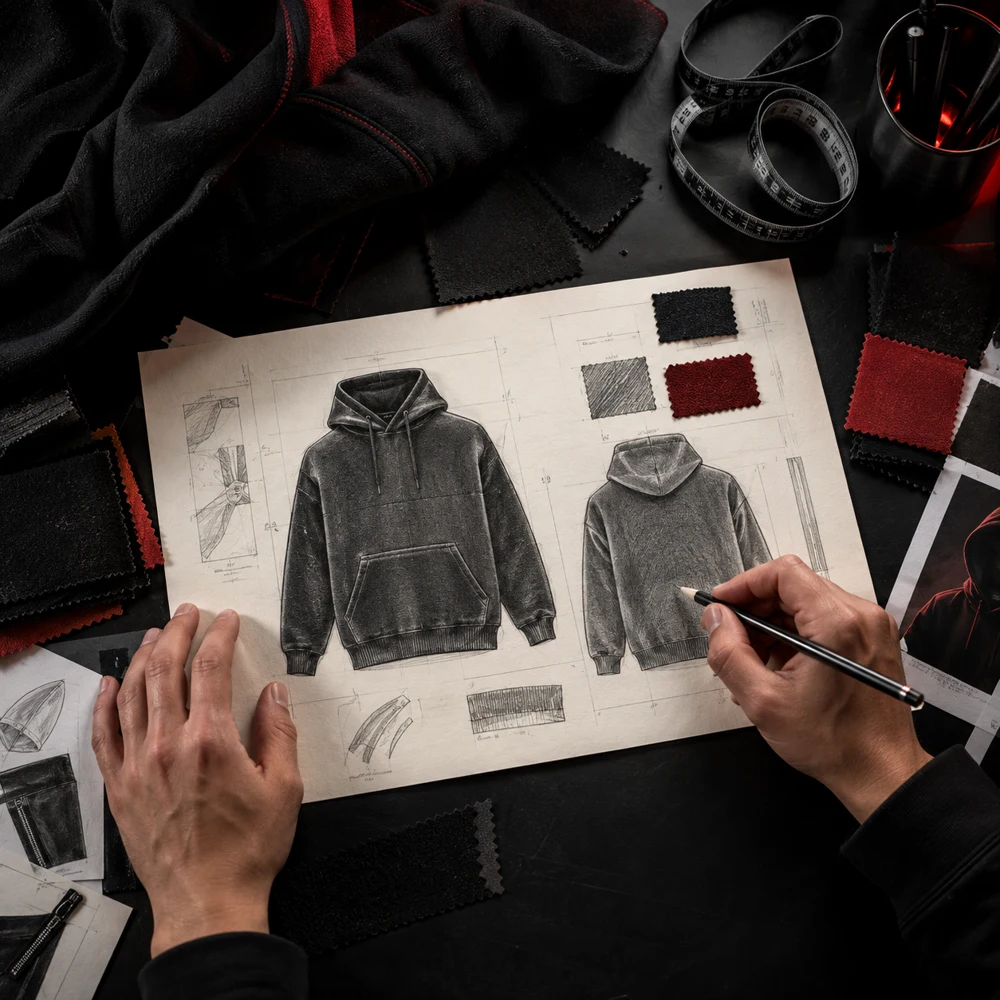
Start with the point of view
Describe the collection in a few words. Is it quiet and oversized, graphic and expressive, or built around technical details? Choose a direction that can guide the decisions that follow. Reference images help most when you explain what you like about each one: the silhouette, a texture, a placement or a colour combination.
Separate the fit from the finish
List the garments you want to develop, then describe each silhouette. Note the intended length, volume and shape. Keep artwork, washes, labels and trims in a separate list so each detail can be reviewed clearly. If a reference shows several ideas, mark the specific details you want to explore.
Make the priorities visible
Identify the features that define the design and the ones you are open to refining. A distinctive print may be essential, while the exact drawcord or pocket construction may still be open. Sharing those priorities helps keep sampling decisions focused.
Bring the practical details
Include your intended quantities, size range and target schedule. Share available artwork files and measurements, and flag anything that still needs development. The brief can evolve; its job is to make the next conversation more useful.