
Start with the decisions you need to control
For a European clothing brand planning a tee or hoodie drop, the useful first question is which details must be unique. A chest graphic may work on an existing style. A specific sleeve shape, body length or pocket arrangement needs a more detailed discussion about garment development. Write those priorities down before comparing suppliers.
Create Fashion Brand in Portugal separates its services into stock blanks, customization of existing base models, and full development to a client’s specifications. Its FAQ also places custom pattern development within the full development service. This provides a concrete example of different sourcing scopes; it does not establish the terms of every manufacturer or a Kylie Industry offer.
Sources: Create Fashion Brand
Clarify what the supplier means by custom
In this guide, a blank is an undecorated base garment, while custom cut-and-sew means developing the garment’s pattern and construction to an agreed brief. Supplier labels can cover different arrangements, so ask which decisions remain open after you choose a route.
Hawthorn describes both garments developed from custom dimensions or sizing references and made-to-order designs with predetermined dimensions, fit and fabric. That is a useful reminder that made to order does not necessarily mean every garment detail starts from your own specification.
Our recommendation is to request a written list of fixed and adjustable features. If a supplier proposes an existing block—the base pattern used to make a style—ask whether changes to it are included, quoted separately or unavailable. Describe the change itself: a shorter body with the same chest width is clearer than a request for a more exclusive fit.
Sources: Hawthorn
Compare both routes against the same design
Use the following comparison as a decision worksheet. These are questions to resolve for your project, not universal promises about the speed, cost or quality of either route. Place your essential requirements at the top and mark each option as confirmed, needs a sample, or unavailable.
- Fit: for a blank, compare the actual style and size chart with your reference. For custom development, request the proposed measurements and size grading. Record any essential difference that remains unresolved.
- Fabric: identify the blank’s exact material and finish. For custom work, agree the material reference and the process for approving alternatives. A description such as heavyweight cotton is not a complete material brief.
- Construction: check the existing seams, pockets, neck and cuffs. If their position or shape must change, ask whether that is an alteration to a base model or a new development task.
- Decoration: name the artwork size, placement and method for both options. Ask which areas can be decorated on the finished garment and whether the design requires access to panels before assembly.
- Repeat orders: ask how the same style, colour and material will be identified later, what substitutions require approval, and whether the proposed size range can be supplied again.
Use current collections as references, then test your own combination
Stanley/Stella’s AW26 collection page presents garment-dyed styles and sculpted fleece as distinct blank options. It shows that choosing a blank can still involve substantial choices about appearance and shape. This is one supplier’s current collection, viewed on its US site; it is not evidence of growing European demand or confirmation of regional availability.
CottonWorks explains that fabric preparation matters to printing, including a clean, absorbent and even surface. It also describes the balance between pigment binder, colourfastness and the feel of the printed fabric. Those technical considerations support reviewing the proposed material and decoration together rather than approving artwork solely from a digital mockup.
For either sourcing route, our recommendation is to request a representative decorated sample on the intended material and colour. Record the artwork version, print dimensions and agreed care assessment. Treat any substitute fabric or blank as a provisional reference, with the differences listed before approval.
Sources: Stanley/Stella · CottonWorks / Cotton Incorporated
Work through a concrete tee example
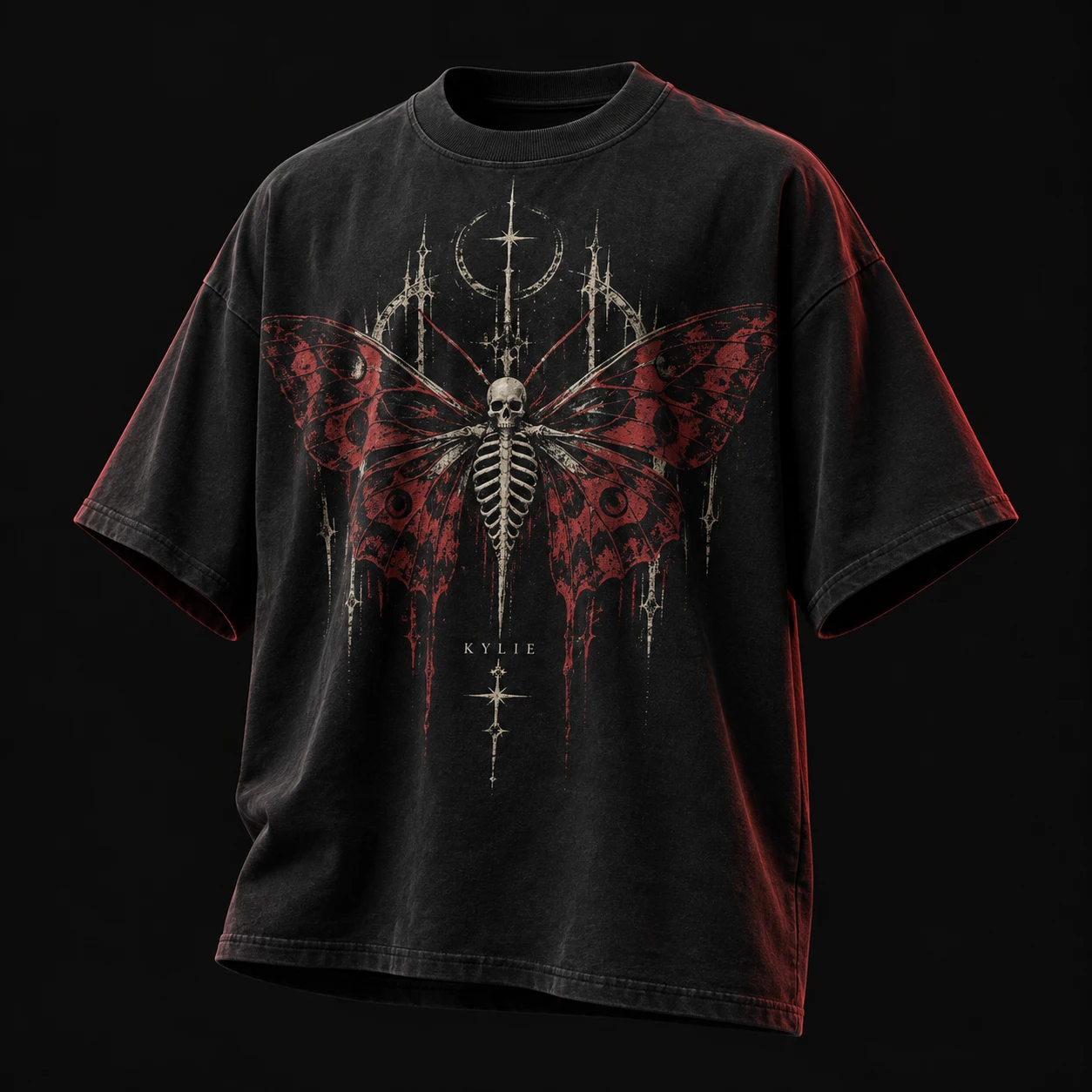
Imagine a label whose essential design is an original front graphic on a relaxed black tee. If a sampled blank meets the intended proportions, fabric feel and decoration requirements, decorating that style is a reasonable route to evaluate. Custom development should solve a specific unmet need, rather than serve as a label for greater quality.
Now change the brief: the same graphic must sit across an unusual panel seam, with a shorter body and a sleeve shape absent from the sampled blanks. The next step is to ask for a construction proposal and identify which details require pattern development. Request a sample that demonstrates those features before deciding that the proposed route meets the brief.
These are hypothetical decisions, not customer case studies. A capsule can use different routes for different pieces. Keep the specifications separate and review the overall collection together if colour, proportions or finish must coordinate.
Compare the quotation scope before choosing
Ask each supplier to quote the same intended quantities by style, colour and size, with the same artwork and delivery destination. For a brand distributing across Europe, identify the actual destination country and receiving address instead of using Europe as a single delivery specification. This guide does not provide country-specific import or labelling advice.
Use a second checklist for the commercial discussion: development and pattern work; undecorated garments or fabric and sewing; decoration; labels; sample revisions; packing; and shipping. Ask what is included, excluded or still dependent on sample approval. Confirm minimum quantities and timing for the actual combination rather than assuming one route always costs less or arrives sooner.
Close the decision with a short record: chosen route, requirements it meets, accepted compromises, sample reference, and outstanding confirmations. Send Kylie Industry your design priorities, reference garment or measurements, artwork, size breakdown and destination. Ask the team to confirm a suitable development scope and project-specific sampling and production arrangements.
Continue your brief
Research and sources
This guide combines published source material with practical specification recommendations. It is not a physical test of the products mentioned. Product examples are references, not endorsements or affiliations.
- FAQ – Frequently Asked Questions CFB — Create Fashion Brand. Checked 2026-09-22.
- Clothing manufacturing and frequently asked questions — Hawthorn. Checked 2026-09-22.
- Autumn/Winter 2026 collection — Stanley/Stella. Checked 2026-09-22.
- Printing Process — CottonWorks / Cotton Incorporated. Checked 2026-09-22.