
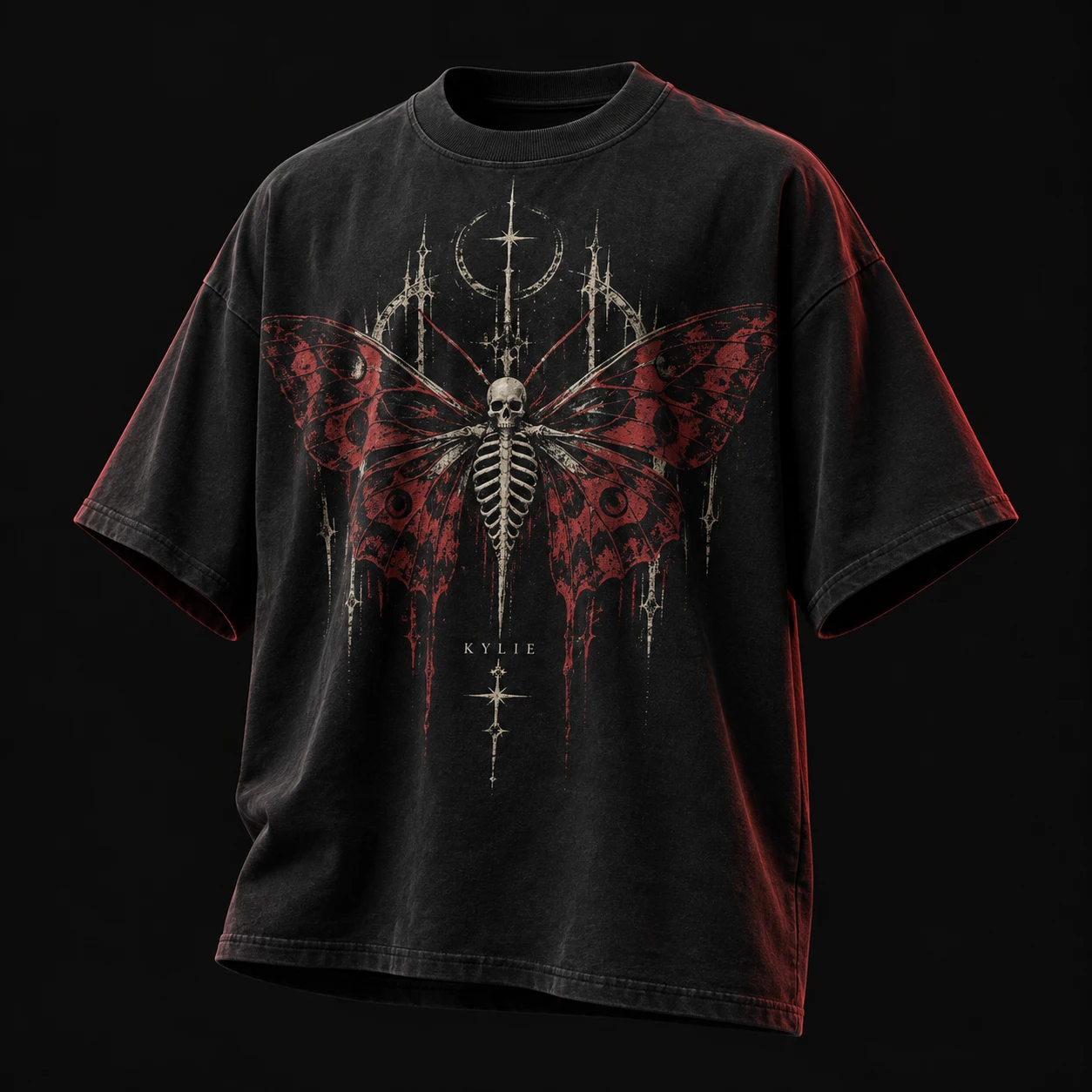
Separate the graphic idea from the durability decision
For a US clothing brand planning a graphic tee, our recommendation is to make two approvals explicit: the design you want and the condition you expect after agreed care. A distressed graphic can be intentional; new damage after washing still needs to be assessed against an agreed reference. Mark the intended distressing in the artwork so the reviewer can distinguish it from a later change.
Stüssy’s current US tee collection lists graphic styles alongside basics and a named puff-print tee. This is an observation of its assortment, not evidence of growing US demand. A collection image can help communicate visual direction, but it does not disclose the production recipe or prove that another garment will perform similarly.
Sources: Stüssy
Identify the garment and print system together
CottonWorks distinguishes printing with dyes from pigment printing, which uses a binder to attach pigment to the fabric. Its explanation also connects binder choice and amount with colorfastness and fabric feel. Ask the printer to identify the proposed process; the instruction “screen print this” does not describe all of those decisions.
For example, AS Colour’s US Heavy Tee page lists screen printing among suitable decoration methods and specifies a composition exception for marle colors. That supplier listing is not a durability result for your artwork. Our recommendation is to record the actual colorway’s composition and finish, plus the ink-system reference, before requesting a printed sample.
Create a separate sample ID whenever the garment material, colorway or print construction changes. Ask the supplier which combinations need their own checks rather than assuming approval of a white tee also approves a dark or blended version. Do not infer Kylie’s available materials or ink brands from these external examples.
Sources: CottonWorks / Cotton Incorporated · AS Colour US
Request curing evidence without prescribing a factory recipe
Avient’s Wilflex curing guide explains that plastisol curing involves both time and temperature, with garment characteristics and ink deposit affecting heating. It also describes limits to judging cure by stretching: fabric and ink elasticity matter. These are reasons to request process-specific evidence rather than treating a quick stretch demonstration as a universal pass.
Our suggested supplier question is: “What ink system was used on this sample, and how did you verify its cure on this garment?” Keep the answer with the sample revision. Let the printer use the ink manufacturer’s current instructions and its validated process; this guide supplies no universal dryer temperature, belt speed or cure time. If the process changes after approval, ask whether the original sample still represents the order.
Sources: Avient / Wilflex
Agree the laundering conditions before comparing results
AATCC’s laundering guidance identifies consistent equipment, detergent and ballast as important to reproducible textile testing. It also explains that optical brighteners can affect color evaluation. Two people saying “I washed it” may therefore be describing different conditions.
For development reviews, agree who will conduct the check and write down the conditions before sending samples. Specify temperatures in both Fahrenheit and Celsius where that helps the US buyer and supplier communicate. State the drying procedure separately. If a buyer or laboratory requires a named method, agree the applicable edition, options and evaluation criteria with that provider. An informal home comparison should remain labelled as such.
Choose conditions that answer the intended care question. Do not adopt a hot wash or tumble-dry setting from an unrelated technical example without considering the finished garment. Agree the procedure and acceptance criteria for this particular project rather than claiming there is one mandatory wash count for every graphic tee.
Sources: AATCC
Use a control and record observations precisely
Avient recommends keeping an unwashed print for comparison in its wash-durability guidance. Our proposed buyer review uses identified, comparable samples: one retained reference and another evaluated after the agreed procedure. Photograph the same graphic areas in consistent lighting, then write what changed rather than diagnosing the cause from the photograph alone.
Use these observation prompts when discussing the result. They are a proposed review checklist, not a laboratory method or evidence that Kylie has tested a garment.
- Graphic surface: mark the location of any new cracks, lifting, sticking or missing detail; distinguish these from the original artwork.
- Color: compare the print and the garment background separately against the retained reference.
- Feel: describe an observed change in stiffness, tackiness or raised detail without using an undefined label such as “bad quality.”
- Garment shape: record any relevant dimensional change separately so print appearance and fit are not collapsed into one verdict.
- Decision: list accepted features, unresolved observations and the specific change requested for the next sample.
Sources: Avient / Wilflex
A print approval record you can send with your brief
Our suggested record below connects the physical sample to a decision someone else can trace. Complete one record per tested combination. Keep the original artwork file and relevant photographs with it, and name the person authorized to approve a revision.
- Identity: style, sample ID, artwork revision, garment size, colorway, material reference and proposed print system.
- Baseline: unwashed control ID, intended distressing or texture, and agreed visual reference.
- Procedure: evaluator, date, equipment or method, detergent, load conditions, wash settings, drying settings and completed cycles.
- Outcome: location-based observations, any required report reference, agreed acceptance criteria and pass, revise or hold decision.
- Change control: what changed since the previous sample and which approvals must be repeated.
Keep artwork approval separate when a wash review is unresolved
Imagine a hypothetical black tee whose logo color and placement are accepted, but whose washed sample has a new crack across a solid part of the graphic. Record the artwork approval and hold the durability decision. Ask the printer to investigate and submit an identified revision; “make the print stronger” leaves the intended remedy and evidence unclear.
To discuss your graphic tee with Kylie Industry, send the artwork, garment direction, intended selling market and completed approval record. Ask which print options and sample checks can be arranged, and confirm costs and timing for that scope. Use the related fit guide for silhouette decisions; this guide addresses what evidence accompanies the printed sample before production approval.
Continue your brief
Research and sources
This guide combines published source material with practical specification recommendations. It is not a physical test of the products mentioned. Product examples are references, not endorsements or affiliations.
- Tees: Basic Logo & Seasonal Graphics — Stüssy. Checked 2026-10-12.
- Printing Process — CottonWorks / Cotton Incorporated. Checked 2026-10-12.
- Heavy Tee Relaxed 5080 — AS Colour US. Checked 2026-10-12.
- Ink Curing Tips — Avient / Wilflex. Checked 2026-10-12.
- Standardized Laundering for Textile Testing — AATCC. Checked 2026-10-12.