
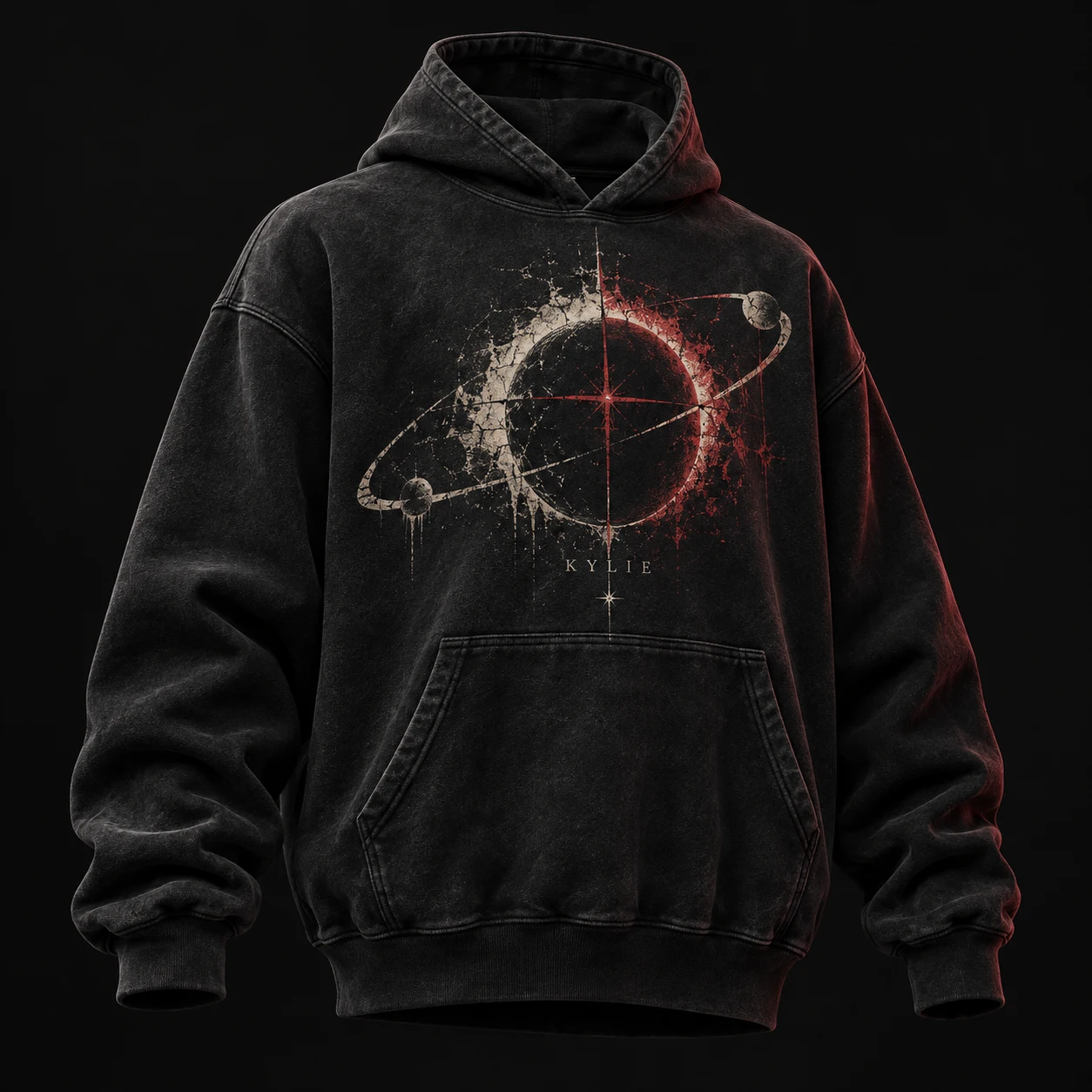
What does the current garment-dyed reference tell you?
Stanley/Stella’s European AW26 collection includes a garment-dyed range. Its German-language Chaser Vintage hoodie page describes a washed seam appearance and notes that slight colour differences between individual pieces are possible. That is a specific product-design observation, not evidence that all European consumers want washed hoodies or that every dyeing process produces the same result.
For a European label developing a similar visual direction, the useful question is what should remain consistent across the order. Decide whether the main attraction is the overall shade, lighter seams, an uneven surface or the relationship between the finish and a graphic. A mood-board image can start that discussion; it cannot settle every approval detail.
Our recommendation is to mark the intended effect on a front-and-back drawing. Identify areas where contrast is welcome and areas where it would be distracting. Keep the proposed dyeing or finishing process subject to supplier confirmation rather than naming a process solely from a photograph.
Sources: Stanley/Stella · Stanley/Stella
How should you describe the target colour?
CottonWorks describes colour through hue, lightness or darkness, and chroma, which concerns colour strength. It also explains that perceived colour depends on the material, lighting and observer. These distinctions help turn a comment such as “too washed” into feedback a supplier can act on.
We recommend recording the intended base shade separately from the fading pattern. For example, a hypothetical brief could call for a dark charcoal body, lighter seam edges and no large pale patch across the centre chest. A revised sample might need a darker base while keeping the existing seam contrast. Those are two separate instructions.
Choose a physical reference for the finish and agree how it will be viewed. CottonWorks recommends standardized lighting when a customer and supplier compare shades. Keep photographs as location notes and a record of the discussion, while retaining the agreed physical reference for approval. If instrumental colour measurements are required, agree their method and limits with the supplier instead of inventing a universal tolerance.
Sources: CottonWorks / Cotton Incorporated
Create an acceptable range, not an unlimited variation allowance
For a finish intended to vary between pieces, we recommend asking for a small set of representative development samples. Select the intended target and, if the supplier can demonstrate them, examples of the lightest and darkest appearance you would accept. This proposed approval tool is a shade range: it is not a claim that every wash can be controlled to those boundaries.
Label each reference and record which differences it permits. Does the agreement cover overall darkness only, or also the intensity of seam fading? Are the hood, body and rib trims intended to read as one shade? Can the graphic area carry the same variation as the rest of the garment? Leave unresolved points open until the actual samples answer them.
The Chaser Vintage product note shows why an allowance for slight variation can be part of a garment-dyed product description. It does not define your order’s acceptable range. Avoid using “every piece is unique” as the only acceptance instruction: it leaves both the desired character and the unwanted extremes unexplained.
Sources: Stanley/Stella
Keep colour transfer separate from the washed appearance
AATCC TM8 addresses colour transferred from a coloured textile surface through rubbing, often called crocking. Its public summary describes procedures using both dry and water-wetted white test cloths. It also notes that treatments such as washing and finishing may affect transfer, so assessment can be specified before or after treatment.
Our recommendation is to agree the relevant dry and wet rubbing requirements with the supplier or a qualified testing provider. Identify the material, colour, finish version, method edition, sample condition and acceptance criteria in the request. A report for another colour or an earlier unfinished material should prompt a question about whether it represents the sample you are approving.
Keep the two decisions explicit: “I accept this faded appearance” and “the agreed colour-transfer requirement has been met.” One does not establish the other. A casual hand-rub demonstration is not the documented controlled procedure described by AATCC, and this guide proposes no universal passing grade.
Sources: AATCC
Use this finish approval card
The following card is our suggested handoff between a brand, its supplier and anyone reviewing test evidence. Complete it for each approved finish version and keep the matching sample references together.
- Target: name the base shade and identify the physical reference, sample date and version.
- Effect map: mark the desired fading at seams, hood, pocket and body; identify areas where pale patches or contrast would be unacceptable.
- Variation range: record the agreed light and dark references, which garment areas they cover, and any differences that remain unresolved.
- Components: state whether body fabric, rib, drawcords, stitching and labels should match, contrast or retain their original appearance; confirm this on the assembled sample.
- Decoration sequence: ask whether the proposed print or embroidery is applied before or after the finish. Approve the resulting combination on a complete sample.
- Colour transfer: list the agreed method, dry/wet conditions, treatment state, result and decision owner separately from visual shade approval.
- Care and packing handoff: confirm the care instructions for the final material and finish; provide packing staff with the approved reference IDs and an escalation rule for visibly outlying pieces.
Turn sample feedback into a production decision
Imagine a hoodie sample has the right seam fading, but its body looks lighter than the agreed target. Record a body-shade revision while retaining the accepted effect map. If a rubbing result is also outstanding, keep that as a separate unresolved item. Combining everything into “improve the wash” makes it hard to know what a second sample must change.
Before approval, check that the finished, decorated sample corresponds to the reference set and documented requirements. Ask how the supplier will compare later pieces and what happens when an item falls outside the agreed appearance. This is a proposed control discussion, not a guarantee that a particular finish or production tolerance is available.
To discuss a washed hoodie with Kylie Industry, send the design, intended selling markets, finish reference and completed approval card. Request confirmation of feasible materials, finish options, sampling and testing arrangements. Quantities, prices and timing need a project-specific quotation; the design visuals on this page do not demonstrate a tested fabric or a verified production result.
Continue your brief
Research and sources
This guide combines published source material with practical specification recommendations. It is not a physical test of the products mentioned. Product examples are references, not endorsements or affiliations.
- AW26 collection: garment-dyed capsule (European site) — Stanley/Stella. Checked 2026-09-28.
- Chaser Vintage STSU282 (European product page) — Stanley/Stella. Checked 2026-09-28.
- Dyeing Basics — CottonWorks / Cotton Incorporated. Checked 2026-09-28.
- TM008 Test Method for Colorfastness to Crocking: Crockmeter — AATCC. Checked 2026-09-28.