
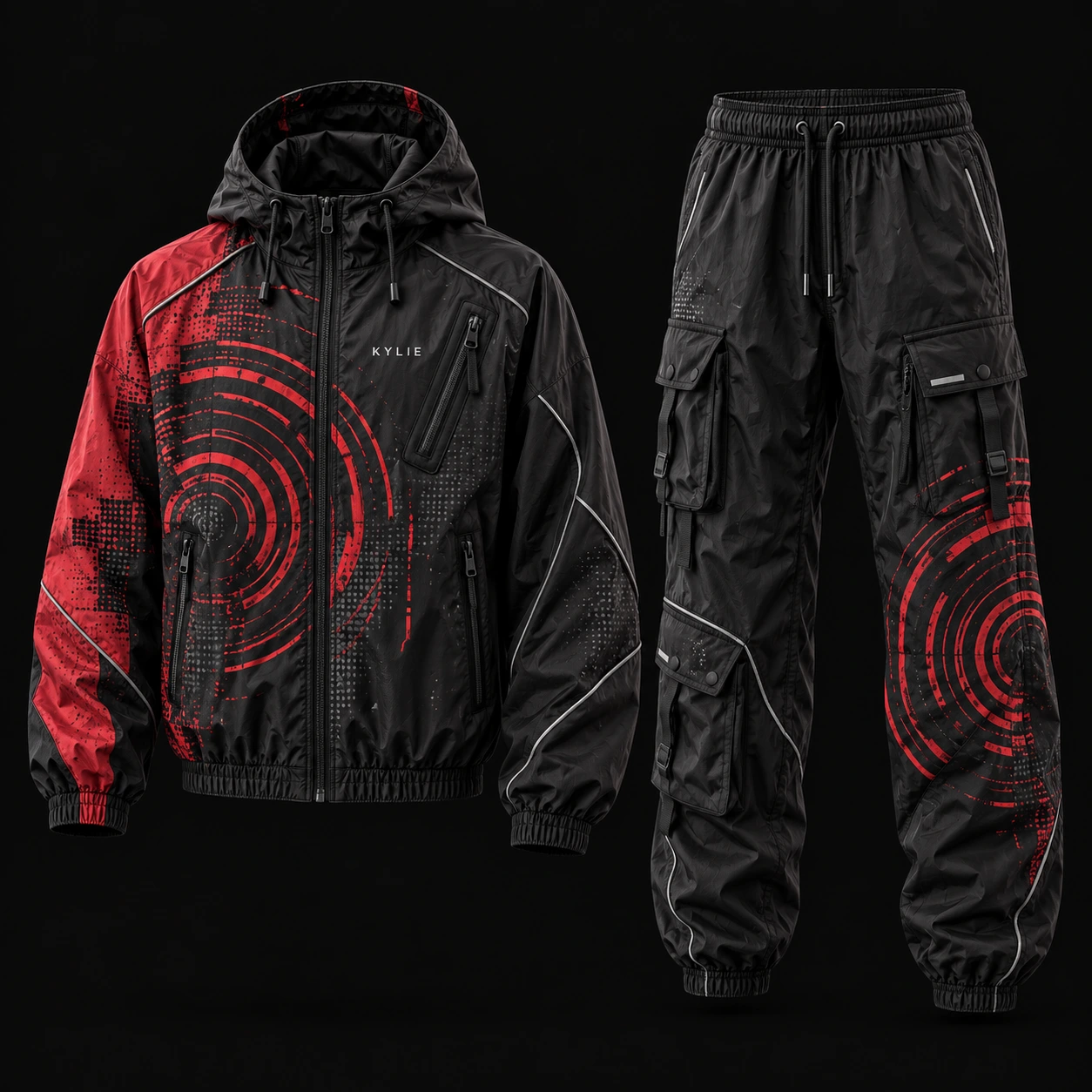
Start with the use case, not a weatherproof adjective
For a Canadian streetwear launch, write down the intended location, season and wearing situation. A short walk between indoor stops and an extended outdoor event are different briefs. Treat these as customer-use scenarios to investigate, rather than assuming one performance requirement for every Canadian buyer.
We recommend choosing an initial direction: a fashion layer with no rain-protection promise, a garment intended for limited light-rain exposure, or a rainwear project with a defined performance requirement. Ask the supplier which direction it can develop and what evidence it can provide before requesting a quotation.
REI distinguishes water-resistant lightweight jackets from rainwear intended for more demanding rain exposure. That distinction helps frame the conversation, but it does not establish a rating for your sample. Words such as windbreaker, nylon and lightweight are not a substitute for a documented water-protection specification.
Sources: REI
Separate surface wetting from water penetration
AATCC describes TM22 as a spray method that evaluates how readily a fabric surface becomes wet. Under controlled conditions, the resulting wetting pattern is compared with a reference chart. It can help assess a water-repellent finish; the public guide does not establish that a complete jacket will keep its wearer dry.
AATCC TM127 addresses a different question: resistance of fabric to water penetration under hydrostatic pressure. Its published scope warns that results can differ from rain or spray methods. Do not treat a spray rating and a hydrostatic result as interchangeable evidence.
Our recommendation is to request the method name, edition used, result, units where applicable, sample identification and sample condition. Ask a qualified laboratory to help select the method and acceptance criteria for the intended claim. There is no universal pass number proposed in this guide; a number without its method and conditions is an incomplete buying specification.
Describe the finish and the fabric construction separately
A durable water repellent finish, commonly shortened to DWR, helps water bead on an outer surface. REI explains that this surface behaviour is distinct from the underlying membrane or coating used in waterproof rainwear.
Patagonia’s Torrentshell 3L provides a concrete specification example: its product page separately identifies a nylon face fabric, a polyurethane membrane, a tricot backer and a DWR finish. These are details of that product, not proposed specifications or performance promises for Kylie Industry.
For your brief, ask the supplier to name the proposed fabric construction and finish separately. Request a swatch or development sample that corresponds to the documented material. If a quotation only says water-resistant fabric, leave the material approval open until both parties agree what that phrase means and which evidence will support it.
Review the assembled garment and each piece of the set
REI highlights seam sealing and zipper protection as rainwear construction considerations, and cautions that tape in selected areas does not establish that an entire garment is waterproof. Patagonia separately lists storm flaps around the Torrentshell’s front zipper, illustrating how closure construction is specified alongside the fabric.
We recommend marking the proposed seams, pockets, closures and decoration positions on the technical drawing. Ask the supplier and testing provider which assembled details need evaluation for your intended claim. Do not approve a water-protection promise solely because an undecorated fabric swatch has a report.
For a coordinated jacket-and-trouser set, keep two approval records. Identify which material and construction are used in each piece and whether the same claim is intended for both. Check the outfit together for movement and coverage, but keep that fit review separate from formal performance evidence.
Copy this evidence request into your sample brief
The following worksheet is our recommended buying tool. Complete it with the supplier and, where needed, a testing provider. An unresolved field should remain visibly open instead of becoming an assumed approval.
- Intended use: record the Canadian target customer, expected wearing situation and whether any rain-protection claim is proposed.
- Claim wording: write the exact phrase planned for the product page, hangtag or packaging. Identify jacket and trousers individually.
- Material identity: record the supplier fabric reference, composition, construction, finish and any agreed colour or batch scope. Link those details to the actual sample.
- Evidence scope: list each question to be answered, the agreed test method and edition, acceptance criteria, result format and who will review the report.
- Sample condition: agree whether assessment covers new material, a cared-for sample or both. Record the care procedure and any agreed repeat cycles; do not invent a standard requirement.
- Garment version: identify seams, closures, lining and final decoration. Ask whether a change to any of these requires further assessment.
- Approval record: retain the sample reference, dated reports, permitted claim wording, outstanding questions and named decision owner.
Resolve the evidence before approving sales copy
Consider a hypothetical brand developing a graphic windbreaker set for short urban outings. The supplier offers a fabric spray result. That is a starting point for discussing surface repellency, not automatic approval to sell the outfit as waterproof. The brand should either define and substantiate a suitable limited claim or leave rain-protection language out while development continues.
We recommend a final handoff with three separate approvals: the design and fit, the agreed material and garment evidence, and the wording allowed on the product listing and packaging. This keeps an attractive sample from silently becoming a stronger promise than the evidence supports.
To discuss a windbreaker project with Kylie Industry, send your design reference, intended use, jacket-and-trouser breakdown and completed evidence request. Ask which materials, construction options and testing arrangements can be confirmed for that project. Costs, quantities and timing belong in the specific quotation; this guide does not establish Kylie product performance.
Sources: AATCC
Continue your brief
Research and sources
This guide combines published source material with practical specification recommendations. It is not a physical test of the products mentioned. Product examples are references, not endorsements or affiliations.
- The Art of Testing: Water Repellency — AATCC. Checked 2026-09-26.
- TM127 Test Method for Water Resistance: Hydrostatic Pressure — AATCC. Checked 2026-09-26.
- How to Choose Rainwear — REI. Checked 2026-09-26.
- Men’s Torrentshell 3L Rain Jacket — Patagonia. Checked 2026-09-26.