
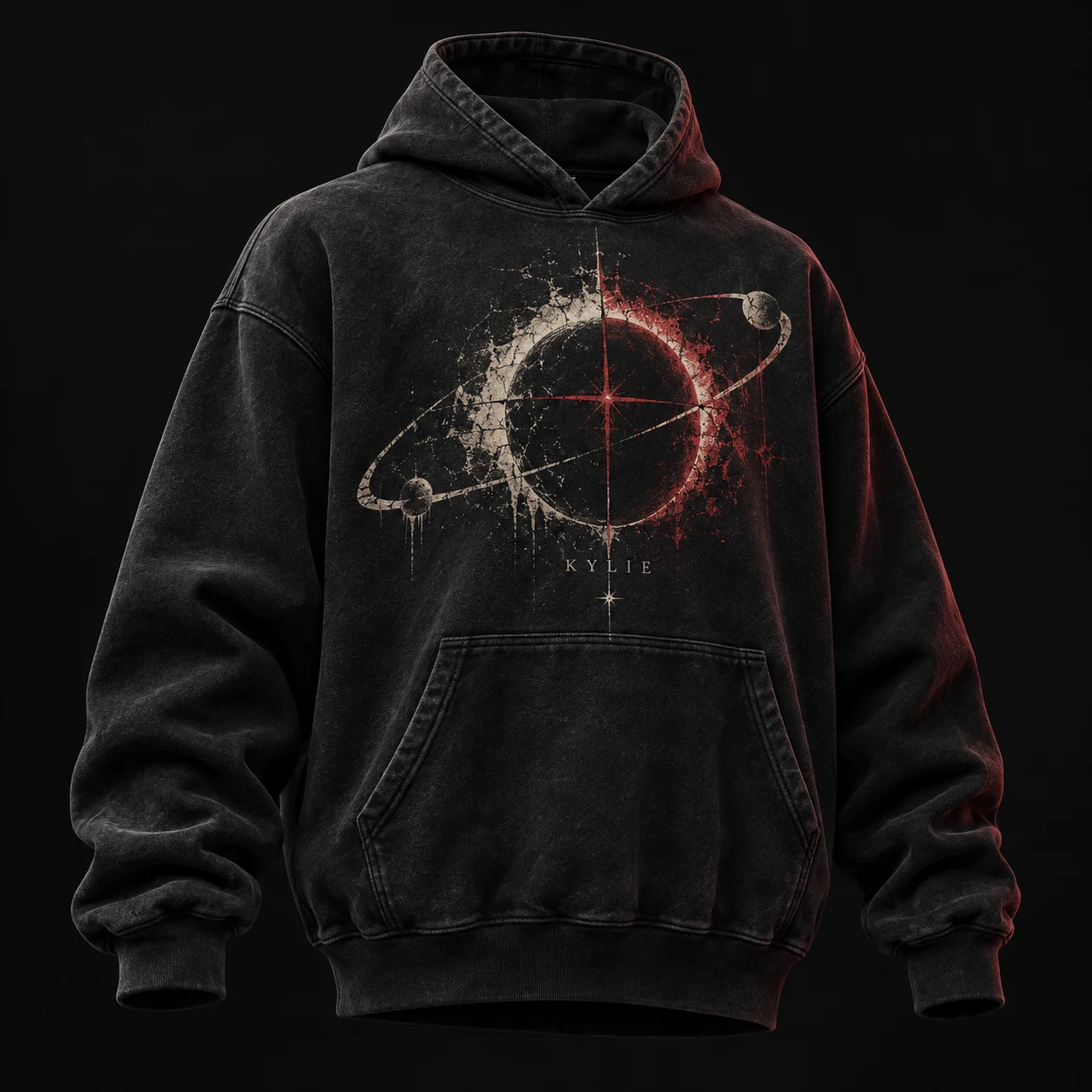
Describe the hood independently from the body
For a European clothing brand developing an adult streetwear hoodie, oversized body fit is not a complete hood brief. State whether the hood should sit close to the head, form a rounded volume or fall into a deliberately loose outline. Use side and front references, and identify which features matter rather than asking the sample maker to copy an entire photograph.
AS Colour's Heavy Hood 5146 lists an oversized fit and separately identifies a pullover hood with self-fabric lining. This is a useful first-party example of body fit and hood construction appearing as distinct details. It does not establish the dimensions of your proposed hood or describe a Kylie garment.
Our recommendation is to give the hood its own approval line within the style record. Identify the body pattern, hood pattern and fabric revisions together. If the hoodie body already fits, say which accepted details should remain fixed while the hood is revised. That makes a local fit discussion more precise than asking for the whole hoodie to become bigger.
Sources: AS Colour UK
Separate body measurements from finished hood dimensions
ISO 8559-1 describes anthropometric measurements used in developing clothing size and shape profiles. Its public scope concerns the measurement of people and associated development data; it does not supply a ready-made finished-hood specification. The listing was reopened for this guide and records confirmation in 2026.
Buyer application: record the intended wearer or fit mannequin reference separately from garment dimensions. Ask the pattern maker which body information is relevant to the proposed hood, and how it has informed the sample. Do not assume that a chest-based size name defines the head fit or that a body measurement can be copied directly into a flat garment dimension.
Use a labelled drawing to agree what opening, depth and height mean for this style. Mark the exact endpoints, the route of the tape and whether the hood is flat or arranged in a defined shape. State whether the edge is measured along its curve or as a straight span. These are proposed recording controls, not measurement instructions reproduced from ISO.
Sources: ISO
Make a hood-only fitting record before changing the pattern
Begin with the hoodie worn over the agreed base layer. Record the sample size, wearer or mannequin reference, fabric state and photography positions. Take front, side and back views with the hood down, then with it up. Avoid repeatedly arranging the sample to hide a fold that returns during normal wear.
With the hood up, note where the front edge sits relative to the face, how the crown settles and whether the back of the hood pulls on the neckline. Ask the wearer to turn and lower the head comfortably, then return to a neutral position. Record observations in plain language; this informal fitting sequence is not a laboratory method or protective-equipment assessment.
With the hood down, review its resting shape, inside finish and relationship to the back neckline. A hood that achieves the intended face framing when raised may still create an unwanted fold when lowered. Record the two states separately so a satisfactory photograph in one position does not become approval of both.
Review the sewn attachment and inside finish
Coats' sweatshirt application guide presents different stitch and thread combinations and explains that its recommendations are starting points because fabrics, constructions and processing vary. That supports reviewing the proposed assembly rather than selecting a seam merely by its generic name. It does not prove any particular seam performance for Kylie.
Our recommendation is to inspect the hood edge, joining seams and neckline attachment on both sides of the actual sample. Ask the manufacturer to identify the proposed construction and any support or covering components. Note visible bulk, puckering, exposed ends or an uncomfortable inside contact point for technical review.
Keep appearance, comfort and any requested test evidence as separate fields. A seam that looks neat in a photograph has not thereby passed a strength assessment. If the technical team recommends testing, agree the applicable method, specimen and acceptance decision before relying on the result. This guide sets no universal thread size, stitch density or seam-strength threshold.
Sources: Coats
Use a local correction sheet and check the size range
The following is an original development worksheet: sample identity; hood pattern revision; material and lining references; measurement drawing; hood-up observations; hood-down observations; requested correction; and decision owner. Attach photographs to the relevant observation. State what should be retained as well as what needs review so an accepted crown shape is not lost while another feature is corrected.
Consider a hypothetical sample whose crown shape is accepted but whose front edge sits farther forward than intended. Record the observed location and desired outcome, then ask the pattern maker to propose the correction. Do not prescribe an arbitrary reduction in every hood dimension. Review the returned sample against the same drawing and wearer reference, and identify precisely which pattern details changed.
Discuss representative sizes rather than extending one successful middle-size fitting to the entire run without agreement. Record which sizes were examined and which remain pending. If hood patterns are shared or grouped across garment sizes, have the supplier state that relationship explicitly and confirm how the proposed grouping meets the intended fit.
Close the hood approval without losing the garment context
After the hood itself is accepted, repeat any intended outer-layer check using the actual companion garment. The existing hoodie-and-overshirt guide covers that paired review. Likewise, use the separate shrinkage guide to plan agreed after-care comparisons; initial hood fit does not replace an after-care decision.
Send Kylie Industry the adult hoodie references, hood measurement drawing, size range, material preferences and hood-up and hood-down priorities. Include the destination country and quantities when requesting development, and ask for the sample scope, available options, price and schedule for the defined project. This guide makes no Europe-wide regulatory claim or production promise. Approve the identified finished sample and retain the revision record for the next order.
Continue your brief
Research and sources
This guide combines published source material with practical specification recommendations. It is not a physical test of the products mentioned. Product examples are references, not endorsements or affiliations.
- Heavy Hood 5146 — AS Colour UK. Checked 2026-10-28.
- ISO 8559-1:2017 — Anthropometric definitions for body measurement — ISO. Checked 2026-10-28.
- Sweatshirts — Coats. Checked 2026-10-28.