
First, check what the fabric name actually tells you
CottonWorks describes twill by its diagonal pattern. That identifies a weave characteristic, but it does not specify the fibre content or the finished garment. Carrington Textiles provides a useful counterexample to a simple either-or comparison: its Raptor fabric is listed as 2/2 twill with ripstop, with a separate composition and finish specification.
The buying implication is straightforward: ask for the complete construction description. If one quotation says cotton twill and another says ripstop, you do not yet have enough information to compare them. Record the mill reference and request a labelled swatch for each option. A material name is a starting point for selection, not an approval instruction.
Sources: CottonWorks / Cotton Incorporated · Carrington Textiles
Use European product pages as references, not demand data
Carhartt WIP’s German store offers a Regular Cargo Pant in Moraga twill with a garment-dyed finish. It also lists a Columbia ripstop version with a rinsed finish. Both descriptions connect the finishing process with a softer feel. These are specific retail examples of different fabric-and-finish combinations, not a controlled comparison between the two materials.
For a brand developing a German or French capsule, annotate what you want from a reference: surface appearance, shape through the leg, or the way fabric sits at the hem. Do not send only a product name and expect the supplier to infer those priorities. These listings establish design options; they do not establish rising European demand, sales volume or a preferred fabric across countries.
Sources: Carhartt WIP · Carhartt WIP
Request a comparison set that answers your buying question
Our recommendation is to shortlist actual fabrics before commissioning a full size set. Ask the supplier to identify which details are confirmed, which are proposals and which still require development. Compare swatches in the intended finished condition whenever possible; label any unfinished substitute clearly.
Use the same information fields for every candidate. If two fabrics differ in several fields, treat the result as a comparison of complete options. You cannot attribute the difference in feel to the weave alone.
- Identity: supplier or mill reference, sample date, colour reference and proposed use on the garment.
- Construction: full weave description and fibre percentages, including any stretch component.
- Weight: stated mass per square metre, its tolerance and whether it describes the fabric before or after the proposed finishing process.
- Finish: dyeing stage, proposed wash or treatment, and any difference between the swatch and production material.
- Commercial availability: confirm the proposed colour, quantity and replenishment route directly; do not infer availability from a reference garment.
A five-point fabric selection worksheet
Create one row per fabric and use the five checks below as columns. Record a short observation and a decision: keep, revise or reject. This is a design review worksheet, not a laboratory test or a universal quality score. Set your priorities before seeing the samples so an attractive colour does not decide every other requirement.
- Surface: examine the face closely and at normal viewing distance. Note the visible weave, texture and sheen against your design reference. Photograph under the same lighting.
- Silhouette: hang equal-sized pieces in the same direction, then review a sewn leg in the intended cut. Decide whether the fabric gives the shape you want when standing and moving.
- Folded bulk: ask for representative seams and a hem made in each candidate. Compare the resulting edges and bends, rather than judging thickness from a single flat layer.
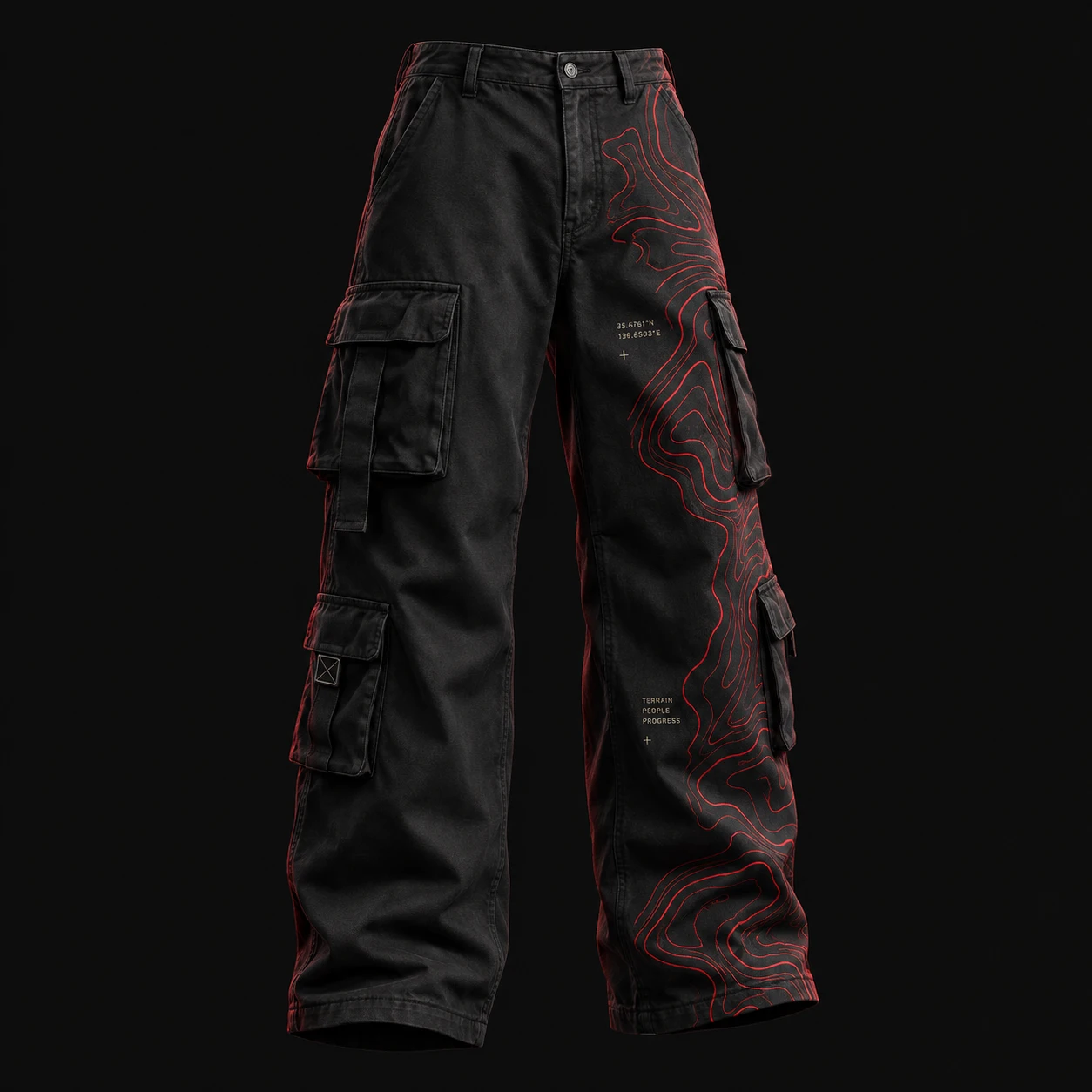
- Decoration: request the intended graphic or label treatment on the actual proposed fabric. Check whether its scale and contrast suit the surface; approve the combination separately.
- Finished appearance: retain an original swatch and compare it with the proposed finished sample. Record which changes in colour, texture or shape you accept and which need revision.
Resolve trade-offs before changing the pattern
Imagine two hypothetical candidates: one gives the relaxed leg shape you want, while another produces a neater folded edge. Neither observation proves that one material is universally better. Choose which result matters most for this style, then ask for a targeted sample revision to address the weaker point.
Keep the pattern and finishing instructions consistent during that comparison. If the supplier changes the leg width, the fabric and the wash together, the next sample will be harder to interpret. Record each deliberate change and the reason for it. Once the material direction is settled, use the separate cargo-pocket guide linked below to develop pocket function and placement.
Turn the chosen fabric into a clear production brief
Our recommended approval record names the selected fabric reference, colour, composition, construction, weight agreement, finishing sequence and approved sewn sample. Attach photographs and retain a physical reference on both sides where practical. Specify that a proposed substitute needs review before use, including a new sample when the change affects the approved appearance.
For a range sold in several European countries, add the actual intended markets and the wearing situation to the brief. A single label such as European autumn does not describe every customer’s needs. Use country-specific customer feedback when available; do not convert that label into a universal fabric weight or performance promise.
Planning a cargo-trouser style with Kylie Industry? Send your reference images, target markets and a short list of fabric priorities through the enquiry link below. Ask which material and sampling options can be confirmed for your project before approving production.
Continue your brief
Research and sources
This guide combines published source material with practical specification recommendations. It is not a physical test of the products mentioned. Product examples are references, not endorsements or affiliations.
- Basic Woven Fabric Designs — CottonWorks / Cotton Incorporated. Checked 2026-10-15.
- Raptor: technical specifications — Carrington Textiles. Checked 2026-10-15.
- Regular Cargo Pant: Moraga Twill, Black Garment Dyed — Carhartt WIP. Checked 2026-10-15.
- Regular Cargo Pant: Columbia Ripstop, Black Rinsed — Carhartt WIP. Checked 2026-10-15.