
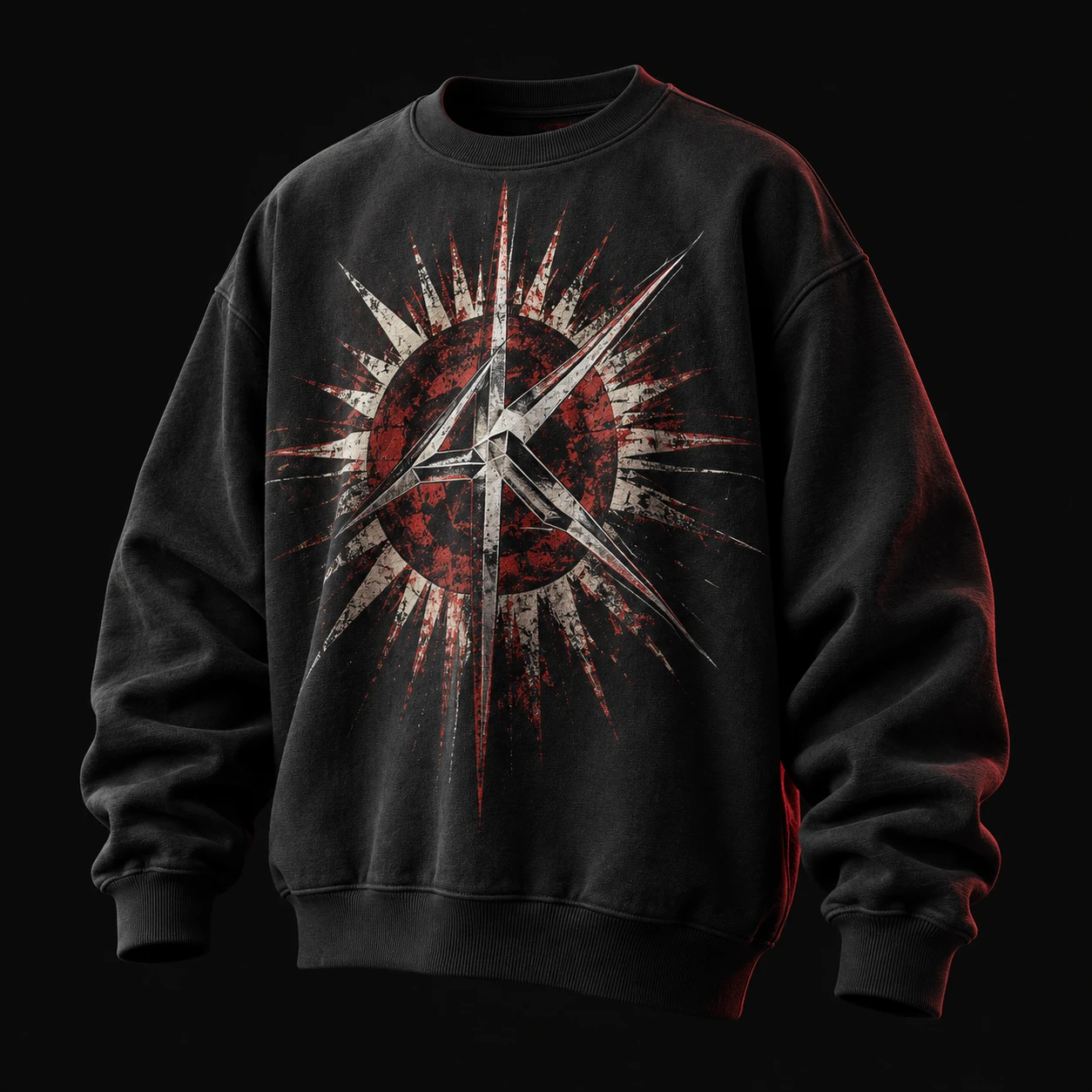
What sweatshirt pilling means
Pills are small tangles of fibres that remain attached to the fabric surface. RISE explains that rubbing during use and washing can raise fibres, creating fuzz and pills. Its Martindale service assesses a fabric’s tendency to develop these surface changes under controlled conditions.
For a Canadian clothing brand choosing fabric for a crewneck drop, our recommendation is to make surface appearance an explicit buying question. Start with the appearance you want to retain, the proposed material and the intended care instructions. Request evidence for that combination before adding performance language to a product description.
Sources: RISE Research Institutes of Sweden
Connect the report to the fabric you are buying
Stanley/Stella’s Changer 2.0 page identifies a brushed construction and a fabric-washed finish. Those details describe a particular product; they do not establish its pilling grade. Use that distinction when reviewing your own supplier’s fabric sheet: descriptive specifications and performance evidence answer different questions.
Our suggested first step is to match the report’s sample identification to a labelled swatch. Record the supplier’s fabric reference, colourway, composition, finish and report number in the same development file. If the report concerns a previous material, ask what connects it to the proposed order. Treat an unexplained match as unresolved rather than assuming two similarly described fabrics are equivalent.
For a decorated sweatshirt, identify whether the evidence covers undecorated fabric or material after the proposed processing. Discuss with the laboratory which specimen best represents the question you need answered. Keep approval of the print or embroidery separate from the fabric comparison.
Sources: Stanley/Stella
Read the method and assessment stage before the grade
RISE describes Martindale pilling testing as controlled rubbing, followed by assessment at specified numbers of rubs. Its service references SS-EN ISO 12945-2. ASTM also publishes a Martindale pilling method, D4970/D4970M. The machine name alone therefore does not identify the entire procedure.
Our recommendation is to copy the exact method designation and edition from each report, then ask the laboratory whether the specimens, test settings and assessment stages permit comparison. Do not convert results between methods yourself. If a sales sheet says only “Martindale tested,” request the underlying report and the property that was assessed.
A useful comparison names the stage beside each result. If one report omits that information, pause the ranking and request clarification. A tidy two-column spreadsheet cannot fix missing test conditions.
Sources: RISE Research Institutes of Sweden · ASTM International
Understand the grade without turning it into a guarantee
ASTM D4970/D4970M describes visual comparison with reference specimens or photographs, using a scale from 5, indicating no pilling, to 1, indicating very severe pilling. It also requires the tested fabric’s state to be reported and notes that finishing and laundering can affect the result.
The same standard cautions against using this method for acceptance testing because interlaboratory data are unavailable. It also distinguishes controlled laboratory results from variable conditions of actual wear. A high reported grade is not a promise that a sweatshirt will remain pill-free for a particular number of months.
Our recommendation is to ask the laboratory and supplier to agree the role of the test before commissioning it: material development, comparison or investigation of a specific concern. Request an explanation of uncertainty and any limitations relevant to that use. Do not impose a universal pass grade from an unrelated product category.
Sources: ASTM International
Use a two-report comparability check
The following is our proposed buyer worksheet. It organises a discussion with the supplier and laboratory; it is not a testing procedure. Give each row one of three outcomes: matched, explained difference or missing information. Keep the original reports attached so a summary cannot hide qualifications.
- Fabric identity: Are A and B the intended candidate materials, with traceable sample references and colourways?
- Method: Do both reports identify the method and edition? If they differ, has the laboratory explained whether comparison is appropriate?
- Specimen state: Was each material tested as received or after a specified preparation? Record the actual preparation instead of writing only “washed.”
- Assessment: Is each grade linked to its stated test stage and rating system? Keep laboratory observations with the number.
- Decision: Which differences remain unresolved, who will clarify them and what evidence is needed before selecting a material?
A practical example: hold the comparison when context is missing
Imagine two hypothetical supplier reports for a Canadian brand’s sweatshirt programme. Report A identifies the material and method, but says nothing about preparation. Report B includes preparation details, but does not clearly identify the colourway. Neither omission proves that the fabric is unsuitable. Both prevent a confident comparison with the proposed samples.
Our suggested response is to request clarification against each report number, then update the worksheet. Avoid declaring a winner because one headline grade looks better. If comparable evidence still cannot be established, ask the laboratory to propose a consistent evaluation of the candidate materials. This example describes a decision process, not test results or a completed Kylie project.
Keep pilling in its place within the sweatshirt brief
Intertek lists pilling resistance, abrasion resistance, strength, colourfastness and dimensional stability as distinct testing properties. A pilling report therefore should not stand in for all the evidence you may need about a sweatshirt.
Our recommendation is to maintain separate decisions for surface appearance, fit after care, decoration and construction. Link each decision to the relevant sample or report. When a material changes, ask which earlier decisions need review; do not silently carry a previous fabric’s evidence onto a replacement.
To discuss a sweatshirt project with Kylie Industry, send the proposed fabric direction, reference swatches, any existing reports and your Canadian selling-market brief. Identify the unresolved comparisons and ask which sampling or testing arrangements can be discussed. Confirm the scope and quotation before commissioning work.
Sources: Intertek
Continue your brief
Research and sources
This guide combines published source material with practical specification recommendations. It is not a physical test of the products mentioned. Product examples are references, not endorsements or affiliations.
- Pilling and surface fuzzing for fabrics according to SS-EN ISO 12945-2 — RISE Research Institutes of Sweden. Checked 2026-10-14.
- ASTM D4970/D4970M-22(2026): Martindale pilling resistance — ASTM International. Checked 2026-10-14.
- Textile Testing Solutions — Intertek. Checked 2026-10-14.
- Changer 2.0 STSU178 — Stanley/Stella. Checked 2026-10-14.