
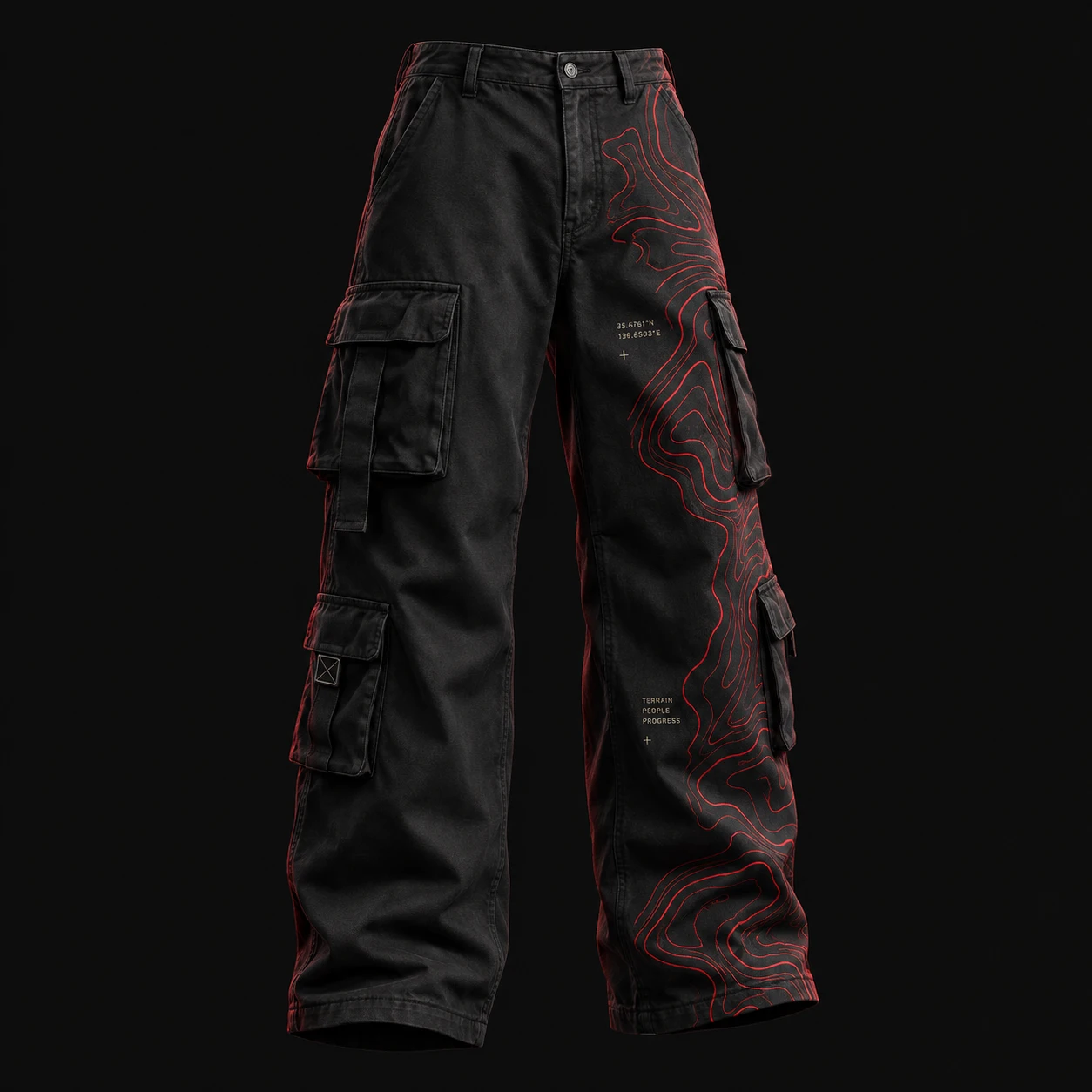
Define the cargo-pocket closure before selecting the finish
A European clothing brand can approve a concealed cap colour while leaving the fastening system unresolved. For a cargo flap, specify the fastener family, component reference and intended attachment route alongside the visible finish. Identify whether the proposal is a sewn-on closure or a mechanically attached system. A photograph showing only the closed flap cannot supply those details.
Prym's brass snap product page describes a sew-on closure with a spring section and stud. That is a useful example of why the word snap is not a complete attachment specification. It is not a recommendation to use that particular product or size on cargo trousers. Our recommendation is to retain the proposed component drawing and supplier reference before asking for an assembled sample.
Sources: Prym
Ask an opening question when the concern is unsnapping
ASTM D4846-96(2021) addresses the force needed to disengage snap fasteners with pulls parallel and perpendicular to the fastener plane. Its public scope also requires attachment to specimens according to the snap producer's specifications. This is a defined disengagement question, rather than a generic certificate that everything about a pocket closure has been approved.
For your brief, name the intended opening action and ask a qualified testing provider which assessment represents it. Keep the method, direction, specimen and reporting units with the result. Do not select an unexplained force value from another garment as a universal target. A buyer's preference for easier access or firmer closure should become an agreed sample decision and, where required, an appropriate technical criterion.
Sources: ASTM International
Keep attachment evidence distinct from opening behaviour
YKK's FAQ describes a snap tester used to assess the holding or breaking strength of prong-ring-attached snaps on garments. It identifies separate grips for the fastener component and the fabric. That description supports asking whether the evidence concerns retention in the material, rather than assuming that a report about disengaging the mating parts answers the same question.
Our recommendation is to use two rows in the approval record: opening action and attachment retention. Against each, identify the actual component, material assembly, assessment and decision. Ask the laboratory to confirm applicability to the chosen snap type. The YKK example concerns a particular attachment family; it should not be presented as a universal testing procedure for every sewn or attached closure. No numerical acceptance limit is prescribed here.
Sources: YKK Americas
Show the fabric stack at each fastening point
YKK warns that attachment through uneven thickness can lead to detachment, weak opening or closing action, or torn fabric. For a cargo flap, that makes the proposed attachment position a technical question to discuss with the component supplier. Avoid diagnosing a defective snap merely because a closure feels inconsistent on an early sample.
We suggest marking both fastening points on a cross-section or construction drawing. Identify the outer cloth, facing, lining, interlining or reinforcement actually proposed at each point, and show nearby folds and seams. Ask the production specialist whether the selected component and attachment arrangement suit that stack. A revised pocket facing or changed seam location should trigger a review of the affected fastening point instead of inheriting the old approval automatically.
Sources: YKK Americas
Review the assembled pocket with a two-decision worksheet
The following is our proposed buyer record, not a laboratory method. Start with the sample size, pocket reference, fastener code, finish and construction revision. Retain photographs of the open flap, closed flap and inside attachment. Then give opening behaviour and attachment evidence their own status: accepted, revision requested or awaiting clarification.
For the practical sample review, use the pocket contents already agreed in the pocket-function brief. Check access with the pocket empty and with those contents, noting whether the flap can be supported and operated as intended. Record local pulling, distortion or visible damage as observations for investigation. A hand review must not be converted into a rated attachment force, a guaranteed carrying capacity or a claim about all future wearers.
- Component identity: which mating parts and attachment family are proposed?
- Opening decision: what action was reviewed, and what technical evidence remains required?
- Attachment decision: which fabric stack and fastening point does the evidence represent?
- Change control: who reviews substitutions to component, facing, reinforcement or position?
Resolve the missing decision before releasing the trim
Imagine a hypothetical cargo sample whose closure opens acceptably, while the supplier has not yet supplied the agreed attachment evidence. Keep the opening preference recorded and the attachment question open. Ask what specimen and assessment will close that gap. Neither approving both rows from a single hand check nor declaring the component unsuitable without investigation follows from the available information.
Send Kylie Industry the cargo drawing, intended pocket use, nominated snap reference if available, fabric-stack notes and unresolved approval questions. Ask which component and sampling arrangements can be discussed, then confirm scope, costs and timing in the quotation. For a European selling-market brief, name the actual destination countries and intended users. This article provides development recommendations, not a jurisdiction-wide compliance decision or evidence that Kylie has tested or stocks a named fastener.
Continue your brief
Research and sources
This guide combines published source material with practical specification recommendations. It is not a physical test of the products mentioned. Product examples are references, not endorsements or affiliations.
- ASTM D4846-96(2021): Resistance to unsnapping of snap fasteners — ASTM International. Checked 2026-11-06.
- FAQs — Snaps and Buttons — YKK Americas. Checked 2026-11-06.
- Snap fasteners, brass — product information — Prym. Checked 2026-11-06.