
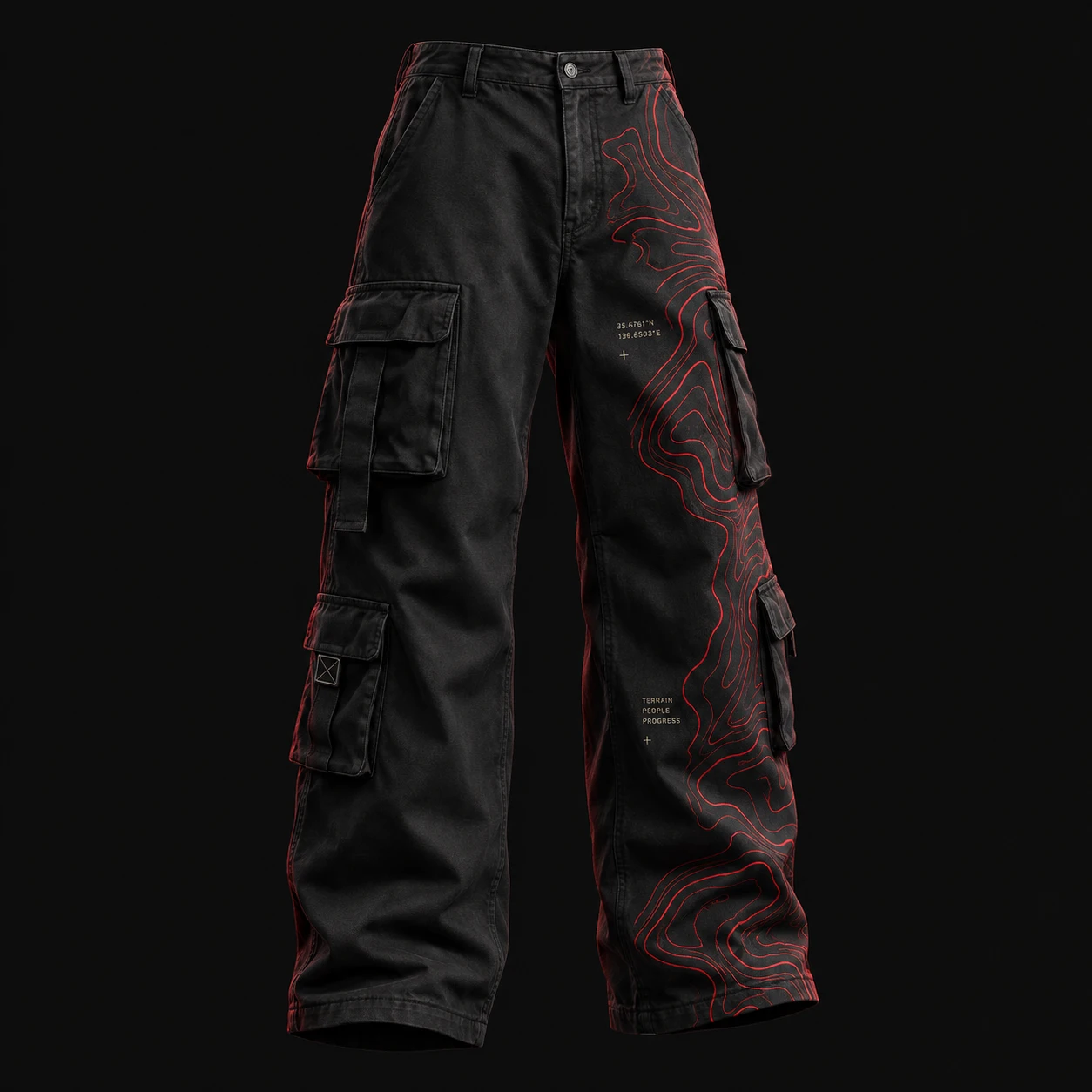
Separate the pocket bag from the outer cargo fabric
Abtex's pocketing page describes woven material used for internal pocket bags and offers cotton, polyester and blended options, including plain and twill constructions. This supplier example shows why 'pocket lining' is not a complete material identity. Its advertised strength, shrinkage and lead-time figures are supplier claims, not Kylie specifications or requirements for every cargo design.
For a US streetwear label, our recommendation is to give the hidden bag a separate line in the bill of materials. Identify which pocket uses it: a front hand pocket, an internal compartment or another construction with a separate bag. A patch pocket made entirely from shell fabric may have no separate pocketing layer. Ask for a section drawing or sample view so the order does not assume all pockets share one construction.
Sources: Abtex International
Compare actual candidates with the approved shell
Request identified swatches in the intended finished condition. Record the supplier reference, stated fibre percentages, construction, colour and agreed weight information for each candidate. Do not select by the words cotton, blend or twill alone. Treat the supplier's proposed substitution as a new material decision even when its colour looks similar.
Our suggested comparison uses the actual shell beside and over the candidate pocketing. Examine the combination under agreed viewing conditions, then inspect it in a sewn sample. Record whether the bag outline or colour is visible through the shell, whether the pocket mouth lies as intended and whether folds create unwanted local bulk. These are observations to agree with the supplier, not a universal opacity rating or proof that one fibre family is always superior. A loose swatch can help shortlist materials, but it cannot show the complete pocket assembly.
Keep fabric performance and seam construction separate
Coats' cargo-trouser application guidance says thread choice depends on the sewing operation, seam demands and the type and weight of the fabric. It does not prescribe one thread for every pocket bag. The buyer implication is to connect the selected pocketing to its proposed join instead of accepting a thread description without the material context.
Ask the manufacturer to identify how the bag is attached, where its edges are finished and how it meets the opening or waistband. Our recommendation is to retain close-up photographs and a construction reference with the material swatch. If the pocketing changes, ask whether the existing sewing proposal still suits it. Do not solve a material concern by prescribing extra stitches without reviewing the resulting sample. The existing seam-slippage guide linked below covers a different question; this material approval should connect to that seam record rather than replace it.
Sources: Coats
Ask abrasion evidence to answer a defined question
ISO 12947-2:2016 describes determination of fabric specimen breakdown by the Martindale abrasion method, with inspection at fixed intervals. Its public scope excludes coated fabrics, including laminated fabrics. A buyer considering abrasion evidence should therefore ask a competent laboratory whether the proposed pocketing and assessment fit the method, rather than applying the same request indiscriminately.
Record the exact material submitted, its finish, the requested assessment and the acceptance criterion agreed before testing. A report for the outer cargo fabric does not establish a result for a different hidden pocketing. Equally, a material abrasion result is not a carrying-load rating for the sewn pocket or a promise of garment service life. This guide sets no universal rub count, laboratory threshold or guaranteed load. Keep laboratory findings and the physical assembly review as separate evidence, each attached to the component it actually covers.
Review the bag through use and the agreed care route
Our proposed sewn-sample review starts with an empty trouser, then uses the ordinary items agreed in the brief. Check hand insertion and retrieval, the position of the bag bottom and any unwanted twisting or gathering. Repeat while sitting and standing comfortably. Avoid sharp objects or improvised heavy-load demonstrations; if a carrying requirement is important, agree a suitable assessment with the manufacturer and relevant specialist.
When a care review is commissioned, identify the decorated or washed garment condition that represents production and record the procedure used. Compare the pocket opening, bag shape, bulk and interaction with the shell before and after that review. Photograph any pulling or distortion and ask the supplier to investigate the cause. Do not claim that the pocketing shrank more than the shell unless measurements support that conclusion. A visual observation identifies an unresolved issue; it does not, by itself, identify the material mechanism.
Release the hidden component with a short decision record
Use the following original approval record for each distinct pocket-bag material. Keep one accepted swatch and the identified sewn sample together. Mark unresolved evidence as open, and record any agreed exception explicitly instead of allowing a sample photograph to stand for approval of the whole order.
- Component: pocket identity, bag construction and its connection to the shell.
- Material: supplier reference, composition, construction, colour and finished condition.
- Compatibility: observed bulk, show-through, opening behaviour and hand access.
- Evidence: specimen identity, requested assessment and the result or open question.
- Release: sample revision, accepted swatch, reviewer, date and covered order lines.
Send a cargo enquiry that includes the inside
For a Kylie Industry enquiry, send the cargo style reference, shell proposal, pocket drawing, intended size range, quantities and destination with your pocketing priorities. State which appearance and use questions the physical sample must resolve, and ask what material options and evidence can be included in the quotation. This article does not establish Kylie fabric specifications, testing capability, cost or lead time.
Before bulk release, confirm that the selected pocketing reference and sample revision appear in the final order record. Retain the earlier decision if a material is proposed for a reorder, then check whether its identity and finished condition are unchanged. If the supplier offers a replacement, review the affected compatibility and evidence questions deliberately. Approving the hidden component gives the manufacturer a clearer instruction than a request for a premium lining, while keeping the final decision tied to something both parties can inspect.
Continue your brief
Research and sources
This guide combines published source material with practical specification recommendations. It is not a physical test of the products mentioned. Product examples are references, not endorsements or affiliations.
- Pocketing Fabric Supplier Pakistan — Abtex International. Checked 2026-11-03.
- Cargo trousers application guidance — Coats. Checked 2026-11-03.
- ISO 12947-2:2016 — Determination of specimen breakdown — International Organization for Standardization. Checked 2026-11-03.