Start with two different fabric questions
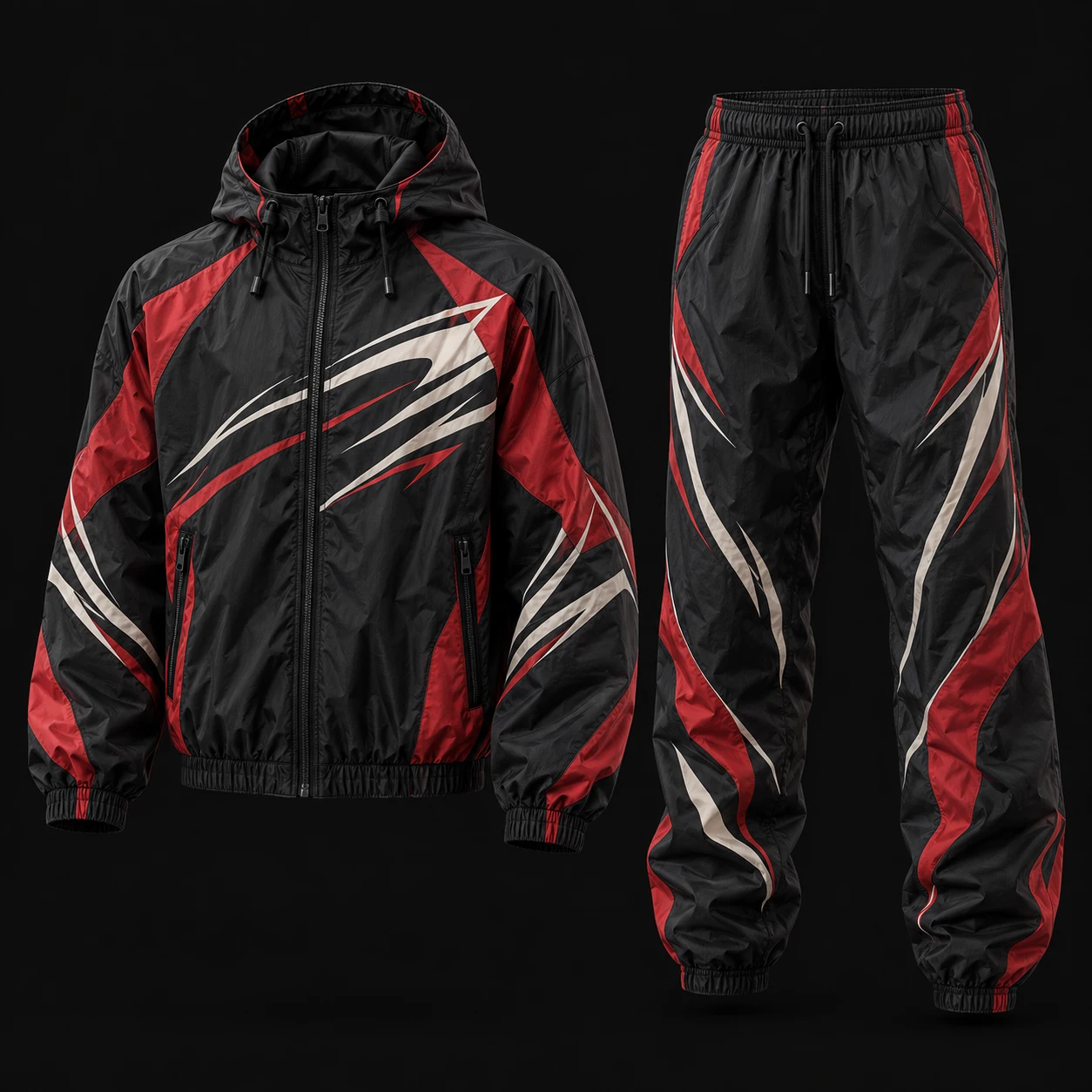
For a European brand developing a lightweight woven windbreaker set, a fabric card marked strong leaves the buying question open. Are you investigating resistance to a tear spreading from an existing cut, or the maximum force reached in a tensile test? Write the question before requesting a report. A jacket and matching trousers may also use different materials, so identify which panel each document represents.
ASTM D1424-25 describes a falling-pendulum method that measures the force needed to propagate a tear from a cut. ISO 13934-2:2014 addresses maximum force using a grab tensile method. These are different assessments. Our recommendation is to give tear and tensile evidence separate rows in the material approval record, even when both results use a force unit. One number should not be substituted for the other.
Sources: ASTM International · International Organization for Standardization
Check the construction before selecting a method
The public ISO 13934-2 abstract says its grab method mainly applies to woven fabrics and is not normally applicable to coated fabrics, among other exclusions. A windbreaker specification that includes a coating therefore needs a method-suitability discussion with the laboratory. Do not remove the coating from the description to make an existing report appear relevant.
SATRA TM213 describes an Elmendorf tear assessment for woven fabrics under dynamic loading and excludes knitted fabrics. ASTM D1424 has its own applicability qualifications. Ask the testing provider to select the appropriate method for the actual material. A method name that appears on another supplier’s certificate is a reference to investigate, not an instruction to test every fabric in the same way.
Sources: International Organization for Standardization · SATRA · ASTM International
Keep tear methods identifiable in the comparison
SATRA explains that its Elmendorf assessment starts with a knife cut and uses a released pendulum to propagate the tear. That makes the starting condition important to understanding the result. It is not a demonstration that an intact jacket cannot be punctured, nor an assessment of every way a garment might be damaged in use.
Our recommendation is to copy the full method designation and edition from each report, along with the laboratory’s description of the reported property. If the documents identify different tear methods, ask the laboratory whether they answer the same purchasing question. Keep the comparison pending where necessary. Converting units does not resolve a difference in test method, preparation or material coverage.
Sources: SATRA
Build a report-to-panel decision card
Use one card for each proposed shell material, rather than attaching a pile of reports to the collection name. The following fields are our suggested purchasing worksheet. They are not laboratory instructions or universal acceptance limits. Agree the required evidence and any acceptance criteria with the supplier and qualified testing provider before commissioning work.
Keep direction labels exactly as the laboratory reports them and ask it to explain any ambiguity. Do not replace the directional results with an average solely to simplify a presentation. The person approving the fabric should be able to see what was tested, which result belongs to which direction and which questions remain unresolved.
- Identity: report number, laboratory, issue date, supplier material code, colour and finished-state reference.
- Coverage: jacket body, sleeve, trouser panel or other identified use; list any different fabrics separately.
- Assessment: tear or tensile, complete method and edition, reported property, units and direction labels.
- Preparation: specimen state, reported conditioning and any agreed care treatment; retain stated exceptions.
- Decision: agreed requirement, supporting evidence, open clarification, responsible person and approval status.
Resolve a mismatch without ranking incompatible numbers
Consider a hypothetical shortlist. Candidate A arrives with a tear report for the proposed finished fabric. Candidate B has a grab tensile report and a photograph of a ripstop grid. Neither the photograph nor the tensile result answers the missing tear question. This is a documentation mismatch, not evidence that B is weaker or that A is the better complete garment.
Request the missing evidence against the same intended use and ask the laboratory to assess comparability. Also check whether the submitted material matches the proposed colour and finish. If a substitute is offered later, reopen the affected approval decision. A familiar fabric name is not a reliable link between a previous report and a new purchase. Keep any commercial choice conditional until the outstanding evidence has been resolved.
Keep fabric evidence separate from the finished set
Our recommendation is to retain a sewn sample alongside the material decision card. Review the agreed construction, pocket openings, movement and appearance as separate sample decisions. A fabric report should remain labelled with its tested scope; it should not become a claim that the seams, trims or complete outfit have passed an assessment they did not undergo.
Likewise, tear and tensile evidence does not establish rain protection or breathability. Keep those requirements in their own brief and use the linked water-protection guide when relevant. For a collection intended for Germany, France or another European market, specify the actual customer use and distribution plan rather than assuming one regional performance threshold. This guide proposes no legal or universal minimum strength.
To discuss a windbreaker project with Kylie Industry, send the design, proposed shell references, available reports and the material questions still open. Ask which sampling and evidence arrangements can be confirmed for your project. Settle scope, costs and timing in the specific quotation, then retain the approved sample and material record with the final production brief.
Continue your brief
Research and sources
This guide combines published source material with practical specification recommendations. It is not a physical test of the products mentioned. Product examples are references, not endorsements or affiliations.
- ASTM D1424-25 — Falling-pendulum tearing strength of fabrics — ASTM International. Checked 2026-11-10.
- ISO 13934-2:2014 — Maximum force using the grab method — International Organization for Standardization. Checked 2026-11-10.
- SATRA TM213 — Tear strength, Elmendorf method — SATRA. Checked 2026-11-10.