
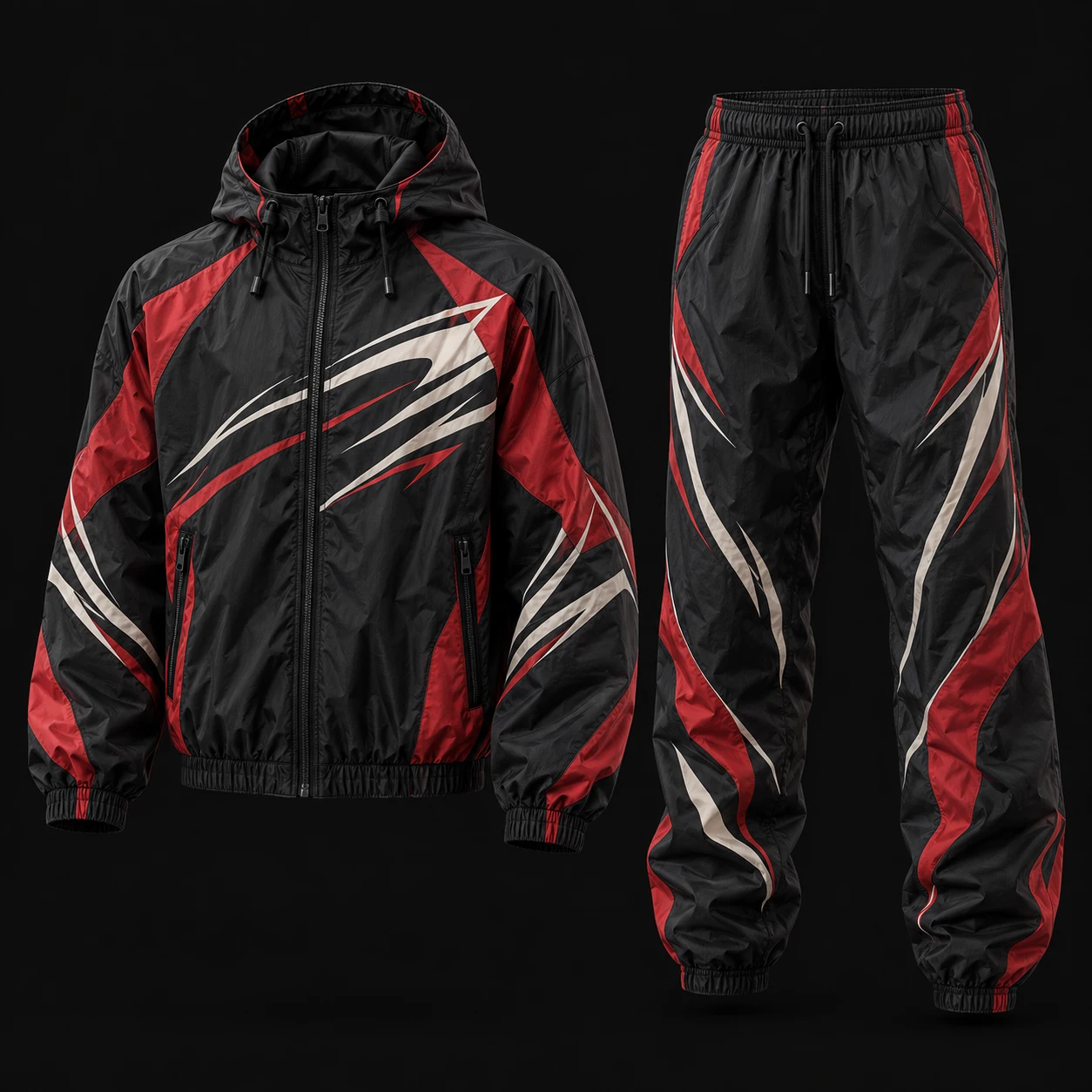
Describe the cuff adjustment as a garment detail
For a US streetwear collection, a cuff tab can change how a windbreaker sleeve sits over a tee, sweatshirt or other intended layer. Begin by drawing the relaxed cuff, the intended adjusted position and where the wearer lifts the tab. Identify which surface carries the hook and which carries the loop. Keep the proposed appearance separate from any technical performance requirement.
Our recommendation is to name the component references rather than writing only a generic hook-and-loop instruction. Record the tab shape, attachment position and usable mating area on the actual sleeve revision. A broad catalogue reference can start the discussion, but the supplier still needs to confirm the offered construction. This guide concerns an optional cuff proposal, not a claim that every Kylie windbreaker uses this closure.
Separate peeling open from sliding apart
Velcro Companies describes peel as disengagement that progresses through rows of hooks when the fastener is pulled back. It describes shear as the hook and loop sliding apart in opposing directions. Those descriptions explain why a buyer should avoid reducing all closure behaviour to one word such as strong. The relevant loading direction needs to be named.
For the cuff brief, we recommend two evidence questions: what opening action should the wearer experience, and what resistance to sliding separation is required for the intended use? Discuss both with the fastener supplier or qualified testing provider. Do not copy a strength number from an industrial attachment into a clothing specification. The supplier's illustrative numbers are not universal targets for a windbreaker cuff.
Sources: Velcro Companies
Read shear evidence as a defined fastener assessment
ASTM D5169-98(2021) addresses dynamic shear strength of hook-and-loop touch fasteners. Its public significance text identifies resistance to separation under forces parallel to the fastener plane. This is a specific technical question; it should not be relabelled as a measure of how easy the tab is to peel open or as an approval of the entire sleeve.
Our recommendation is to retain the method and edition, identified mating products, specimen arrangement, result and reporting units together. Ask the laboratory to explain whether an existing report represents the proposed pair and the decision being made. Where the brief also needs peel evidence, request an appropriate separate assessment rather than assuming the shear result supplies it. Agree acceptance criteria before commissioning work; this guide prescribes no universal pass value.
Sources: ASTM International
Keep the direction of each mating component visible
YKK's attachment guidance distinguishes the machine direction, along the rolled product, from the cross direction across its width. It describes four ways those directions can meet when hook and loop engage and warns that the configuration affects performance. This supports recording direction as part of component identification, rather than assuming that rotating a cut piece leaves every property unchanged.
We suggest arrows on the cuff drawing showing each component's identified direction. Ask the component supplier to confirm how the proposed pieces should be cut and attached for this application. Retain that answer with the sample. Do not turn YKK's general guidance into a claim that one orientation is always correct for every supplier's product, or that a particular branded component has been selected for Kylie production.
Sources: YKK Americas
Review overlap and access on the sewn sleeve
Use the intended underlayer and sample size for the practical cuff review. Photograph the relaxed sleeve and each agreed adjustment position, noting the actual engaged area rather than only the full length of tape sewn to the garment. Check whether the wearer can locate, grip and lift the tab without an unintended pull on another sleeve detail. Record observations for this sample, not a laboratory rating.
Our proposed worksheet keeps five fields together: sleeve revision and size; hook and loop references; direction arrows; engaged overlap at each reviewed position; and outstanding evidence or fit decisions. Also note exposed hook, tab overhang and any contact with the intended underlayer. These are sample-review prompts, not predictions that a particular fabric will snag or a prescribed cuff dimension. Ask for a revised sample where the observed result does not match the design brief.
Close the cuff decision without extending the evidence
Consider a hypothetical sample with an accepted adjusted appearance and comfortable opening action, but no agreed shear evidence for the proposed mating pair. Keep those accepted observations and the missing technical question separate. Ask the supplier which assessment will resolve the remaining decision. If the hook, loop, orientation, tab shape or attachment changes, review which earlier observations and reports still apply.
Send Kylie Industry the adult windbreaker sketch, intended US market, cuff reference, underlayer and proposed adjustment positions. Include any component information already available and identify the decisions still open for quotation or sampling. Ask what arrangements can be discussed, then confirm costs, quantities and timing for the actual project. Cuff approval does not establish protection from weather, a service lifetime or a certification, and no physical sample was tested for this article.
Continue your brief
Research and sources
This guide combines published source material with practical specification recommendations. It is not a physical test of the products mentioned. Product examples are references, not endorsements or affiliations.
- How do VELCRO Brand Fasteners Work? — Velcro Companies. Checked 2026-11-07.
- ASTM D5169-98(2021): Dynamic shear strength of hook and loop touch fasteners — ASTM International. Checked 2026-11-07.
- What is the best way to attach hook and loop fasteners? — YKK Americas. Checked 2026-11-07.